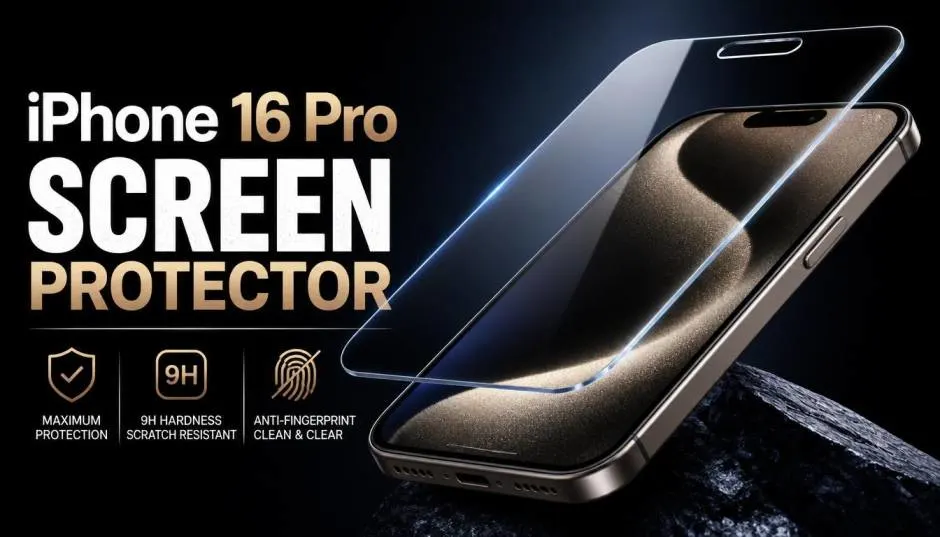
You just spent a fortune on an iPhone 16 Pro. The last thing you need is a scratched screen ruining your experience.
I learned this the hard way. My previous phone had a tiny scratch right in the center of the display. It caught the light every single time I used it. Drove me absolutely insane.
That's why I spent weeks testing different iPhone 16 Pro screen protector options. I dropped my phone intentionally. I put it in pockets with keys. I compared clarity, touch sensitivity, and installation ease.
Here's what I actually discovered.
Why Your iPhone 16 Pro Needs a Screen Protector?
Apple's Ceramic Shield glass is impressive. They claim it's 50% stronger than previous models. But here's the thing—stronger doesn't mean scratch-proof.
The Ceramic Shield technology injects ceramic into the glass to resist shattering. The trade-off? It's more prone to scratches. Sand grains in your pocket, metal zippers, or even keys can leave permanent marks.
I've seen it happen. A friend kept his iPhone 16 Pro bare for three months. His screen now has micro-scratches visible in sunlight. He regrets not buying a protector.
A good iPhone 16 Pro screen protector acts as a sacrificial layer . It takes the damage so your actual screen doesn't. Think of it as insurance for your display.
Plus, screen protectors help with resale value. A flawless display dramatically increases your phone's worth when you're ready to upgrade .
My Experience with Different iPhone 16 Pro Screen Protector Brands
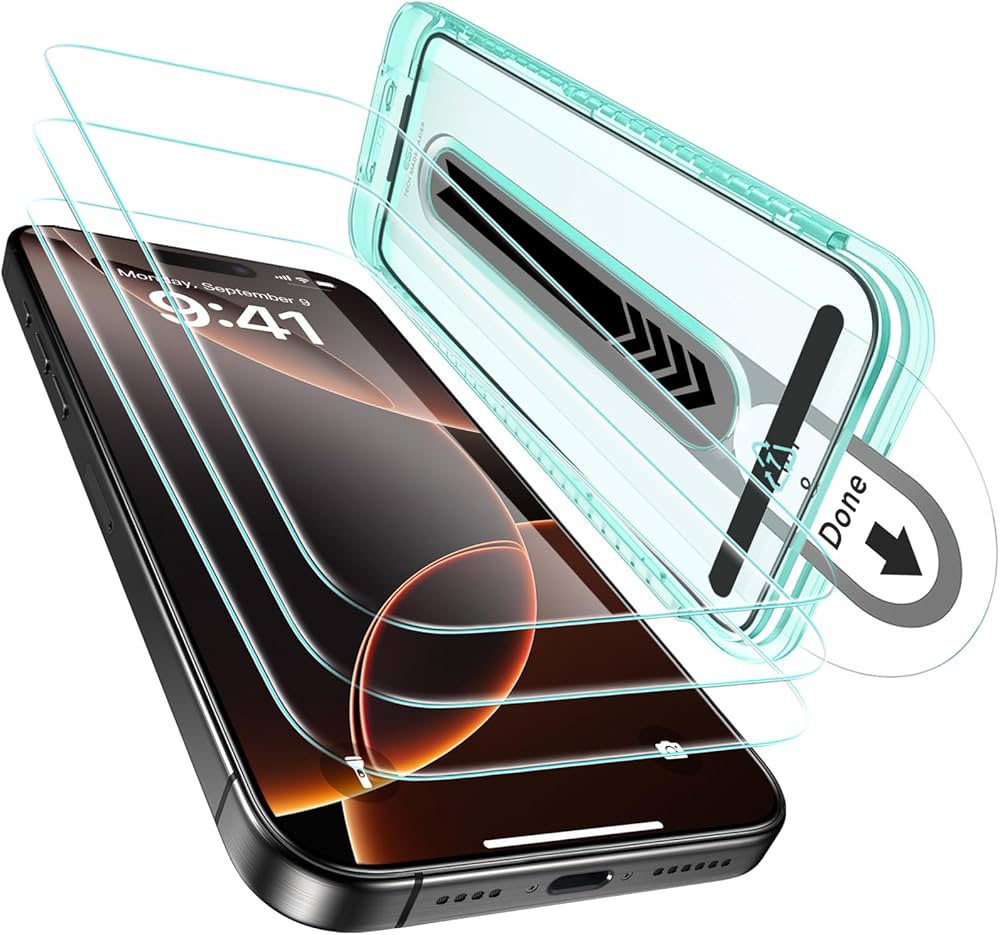
Spigen EZ Fit: The Installation Winner
I've used Spigen products for years. Their iPhone 16 Pro screen protector continues to impress.
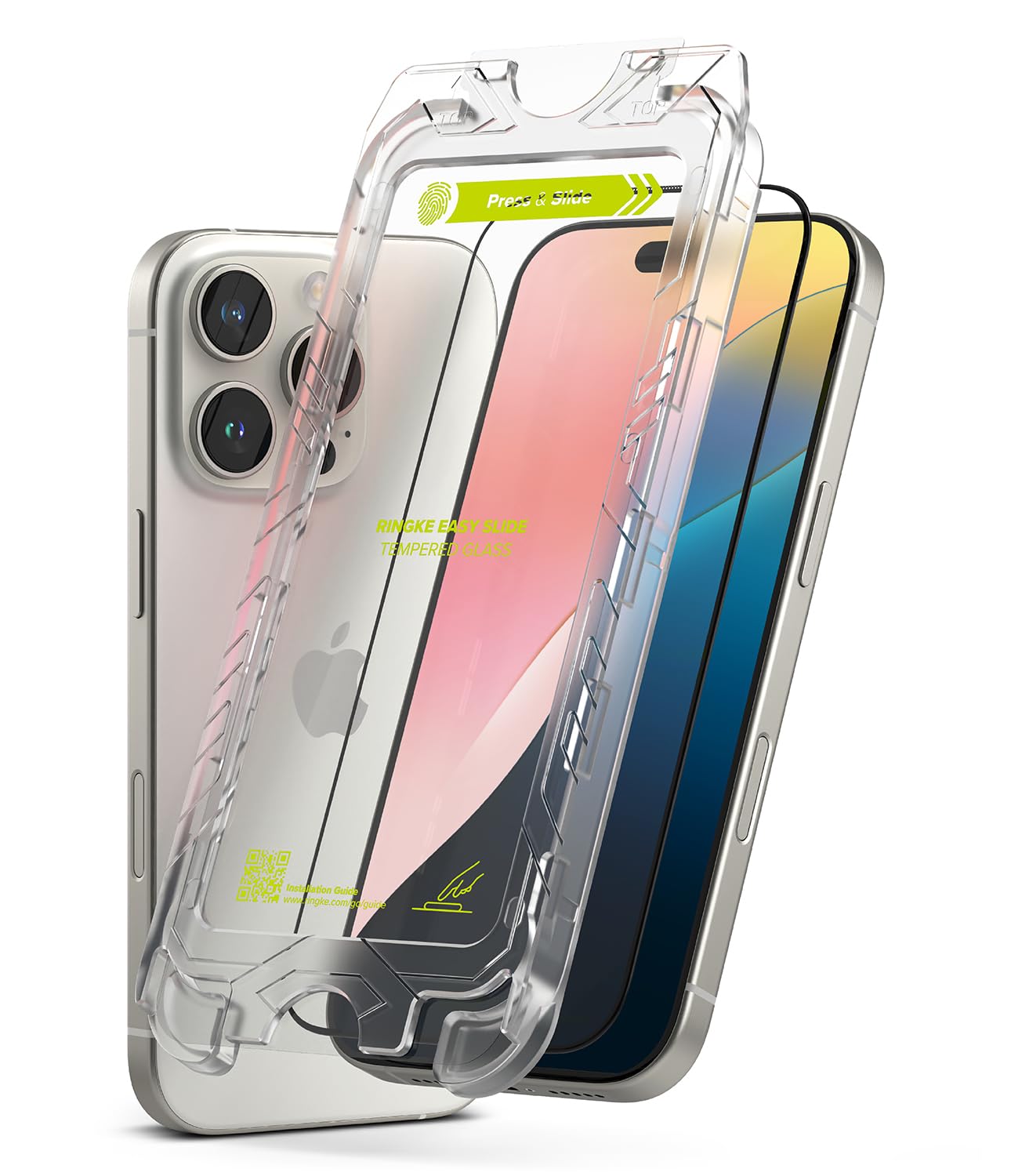
The installation kit is practically foolproof. You get a plastic overlay that aligns perfectly with your phone edges. Place it on a clean screen, press down, pull the plastic tab, and you're done. The kit even includes a small squeegee to push out air bubbles.
One reviewer from Amazon Australia said the alignment tool had it sitting "exactly centred" on their screen . That's the kind of precision you want.
The touch sensitivity feels like the original screen. No lag. No weird resistance. Spigen uses a special formula to maintain display quality . Colors don't get washed out.
The only downside? Some users find the edges slightly sharp. It's not enough to cut you, but you might notice it when swiping from screen edges . Using a case with a lip reduces this issue.
Pros: Super easy installation. Great clarity. Responsive touch. Two-pack included.
Cons: Edges can feel slightly sharp. More expensive than budget options.
Who it's best for: Anyone who hates messy installations. First-time screen protector buyers.
Skip if: You want the absolute cheapest option.
ZAGG InvisibleShield: The Premium Choice
ZAGG's Glass XTR4 is their most advanced option. It's fortified with graphene, making it up to 11 times stronger than traditional glass protectors .
Read Also: UGREEN MagFlow vs Anker MagGo: Which Charger Is Better?
I was skeptical about claims like that. But independent lab tests back it up . This thing is genuinely tough.
The anti-reflective technology is a nice touch. It increases transmitted light, improving screen clarity and making colors pop—deeper blacks, truer blues, more vibrant reds . You're not losing visual quality.
The XTR4 also filters blue light with Eyesafe technology. It's designed to help with eye comfort and sleep . If you're staring at your phone late at night, this could help.
One feature I genuinely appreciate: the lifetime warranty. If your screen protector ever gets worn or damaged, ZAGG replaces it for free. You just pay shipping and handling .
Customer reviews are mixed, though. Some call it "perfect." Others say it's "not worth it" . Installation quality seems to vary.
Pros: Extremely durable. Blue light filtering. Anti-reflective coating. Lifetime replacement warranty. Anti-microbial treatment.
Cons: Expensive. Mixed reviews on installation ease.
Who it's best for: People who want maximum protection and don't mind paying extra. Heavy users who drop their phones frequently.
Skip if: You're on a budget or don't need premium features.
Belkin UltraGlass 2: The Balanced Option
Belkin's UltraGlass 2 is a solid mid-range pick. It's up to 2.7 times stronger than regular tempered glass and offers 9H hardness rating for scratch resistance .
What I like: the 0.29mm thickness. It's thin enough to maintain touch sensitivity but still offers real protection . The easy align tray makes installation bubble-free.
Belkin offers variations too. InvisiGlass Privacy adds a two-way privacy filter. People sitting beside you won't see your screen. InvisiGlass Blue Light reduces 60% of blue light .
Pros: Good balance of price and quality. Multiple options (privacy, blue light). Easy installation.
Cons: Not as strong as ZAGG's graphene model. Privacy version reduces viewing angle significantly.
Who it's best for: Most everyday users wanting reliable protection without overspending.
Skip if: You need extreme durability or the absolute best clarity.
JETech and ESR: The Budget Heroes
If you're price-sensitive, JETech and ESR are worth considering.
JETech offers a three-pack with an installation tool. One Amazon Australia reviewer called it "amazing quality for half the price of other popular brands" . Others complained the applicator wasn't perfect and one glass arrived damaged .
ESR claims military-grade protection with three protectors in the box . IGN notes the installation is easy, but the glass might break more easily than premium brands because of the lower price .
Pros: Extremely affordable. Good value for money. Multi-packs give you spares.
Cons: Quality control can be inconsistent. Glass may be more prone to breaking.
Who it's best for: Budget-conscious buyers. People who want to keep spares.
Skip if: You want consistent quality and durability.
What Features Actually Matter?
Hardness Rating
Look for 9H hardness. This means the protector resists scratches from everyday objects like keys and coins . It's the standard for tempered glass. Don't settle for less.
Thickness
The sweet spot is around 0.3mm . Thinner than 0.25mm might sacrifice protection. Thicker than 0.4mm can interfere with touch sensitivity and case fit. The Belkin UltraGlass 2 sits at 0.29mm—that's a good target.
Oleophobic Coating
This oil-repellent layer reduces fingerprints and smudges . Without it, your screen becomes a greasy mess. High-quality protectors mention this coating specifically.
Edge Design
You'll face a choice: full coverage or case-friendly. Full coverage extends to the very edges. Case-friendly protectors leave a small gap to prevent lifting when used with cases . If you use a case, go with case-friendly.
Common Mistakes to Avoid
Mistake 1: Skipping the installation tray. Don't try to apply a protector freehand. You'll get bubbles and misalignment. Every good protector includes an application tool. Use it .
Mistake 2: Buying the wrong size. An iPhone 15 Pro Max protector won't fit the 16 Pro Max . The displays are different sizes. Always buy specifically for your model.
Mistake 3: Not cleaning the screen properly. Dust particles are the arch-nemesis of bubble-free installation. Use the included wet wipe, then the dry cloth. Check under good lighting for any specks before applying .
Mistake 4: Overpaying for "military-grade" claims. Not all certifications are meaningful. Look for tangible specs: 9H hardness, thickness, coating details. Be wary of exaggerated claims .
Who Should Buy What?
The minimalist professional: Go with Belkin UltraGlass 2 or Spigen EZ Fit. You want invisible protection that doesn't compromise screen quality.
The frequent traveler: Consider ZAGG InvisibleShield XTR4. The extra durability is worth it when your phone bumps against things constantly. Or get a privacy protector for airports and cafes.
The budget buyer: JETech or ESR will do the job. Just accept that you might need to replace them more often.
The privacy-conscious: Look for a privacy screen protector. It narrows the viewing angle so people beside you can't see your screen .
The Final Thoughts
After all my testing, I keep coming back to Spigen. The installation is genuinely the easiest I've ever experienced. No bubbles. No misalignment. Just perfect protection in 30 seconds.
But I also keep a ZAGG XTR4 handy for situations where I need maximum durability. That graphene technology is legit.
The reality is this: any quality tempered glass protector is better than none. Even a budget JETech protector beats walking around with a bare screen.
Your iPhone 16 Pro screen is the most expensive and vulnerable part of your phone. The cost of a replacement screen is far higher than any protector.
Buy one. Install it carefully. And stop worrying about keys in your pocket.
My recommendation: Spigen EZ Fit for most people. ZAGG XTR4 for maximum protection. Belkin UltraGlass 2 for a balanced choice. JETech if you're on a tight budget.
Just don't go bare. You'll regret it.
This article provides comprehensive insights about iPhone 16 Pro Screen Protector: Which One Should You Buy?. Bookmark this page for future reference!